










Finding the best roofing material for Florida homes comes down to balancing hurricane protection, cost, and practicality; for most homeowners, impact-resistant shingles strike that balance best, with metal and tile offering strong alternatives when budget and structure allow. Ask ten Florida homeowners what the best roofing material is, and you’ll get ten different answers, usually based on whichever roof they happen to have.
Key Takeaways
- Class 4 impact-resistant shingles offer the best overall value for Florida hurricane protection, combining strong wind performance with a far more accessible price than metal or tile.
- Metal standing seam roofing has the highest wind rating available, up to 180 mph, and lasts 40-70 years.
- Concrete and clay tile perform excellently in hurricanes when mechanically fastened, but the heavy weight sometimes requires structural reinforcement.
- Standard shingle roofs over 15 years old can trigger insurance nonrenewal in Florida; upgrading to Class 4 impact-resistant shingles addresses both wind performance and this insurance concern.
- Wind mitigation credits can reduce your insurance premium by 30-45% when combined with other hardening features.
- Material alone doesn’t determine hurricane performance; installation quality at the edges, ridges, and flashing’s where most roof failures actually start.
Table of Contents
Why Roofing Material Matters More in Florida than Almost Anywhere Else
Florida’s roofs face a combination of stressors most of the country never deals with: sustained high heat, intense exposure to ultraviolet (UV) radiation, tropical humidity, and the very real chance of hurricane-force winds every season. Every material on this list has to survive all four, not just one.
Most roof failures during a hurricane don’t look like the whole roof peeling off in one piece. They start at weak points: edges, ridges, flashing, and soffits, or wherever the roof attaches to the structure underneath. That means that the material you choose matters, but so does the underlayment, fastening pattern, and installation quality beneath it.
If you’re building your full storm plan, our hurricane preparedness checklist covers the rest of what your home needs beyond the roof itself.
Impact-Resistant Shingles, Best Overall Choice for Florida Homes
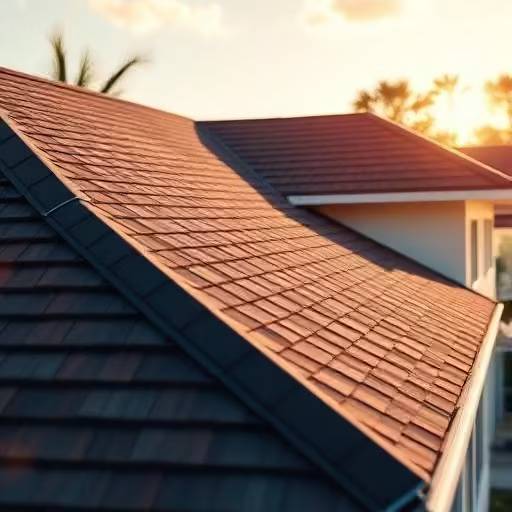
Class 4 impact-resistant architectural shingles hit the sweet spot that most Florida homeowners are looking for: great hurricane performance, a manageable price tag, and a look that fits nearly any home style. For most homeowners weighing cost against protection, this is where that balance tips clearly in shingles’ favor.
- Wind rating: 130-150 mph, typically
- Lifespan in Florida: 20-30 years
- Installed cost: about $5-8 per square foot
- Insurance impact: qualifies for wind mitigation discounts, and upgrading from an older standard shingle roof directly addresses the 15-year insurance age concern
Leading products include GAF Armor Shield II, Owens Corning Duration STORM, and CertainTeed Highland Slate Impact Resistant, all Class 4-rated with Florida Building Code product approval. Look specifically for algae-resistant granules; without them, shingles develop dark streaking within two to five years in Florida’s humidity. Explore our shingle roofing options to find out about our installation process.
Metal Standing Seam, Top Performer for Wind Resistance
Metal standing seam roofing delivers the strongest hurricane performance available for a residential roof. Interlocking panels with concealed fasteners create a continuous surface with no exposed points for wind to grab.
- Wind rating: up to 180 mph
- Lifespan in Florida: 40-70 years
- Installed cost: approximately $7.50-14 per square foot
- Insurance impact: exempt from the 15-year age rule; can reduce cooling costs by 10-25%
For coastal Florida properties, aluminum or Galvalume panels with a Kynar 500 finish resist salt spray far better than standard galvanized steel, which can corrode within five to 10 years near salt water. Also, all fasteners and flashing on a coastal metal roof should be stainless steel.
Concrete and Clay Tile, Weight as an Advantage
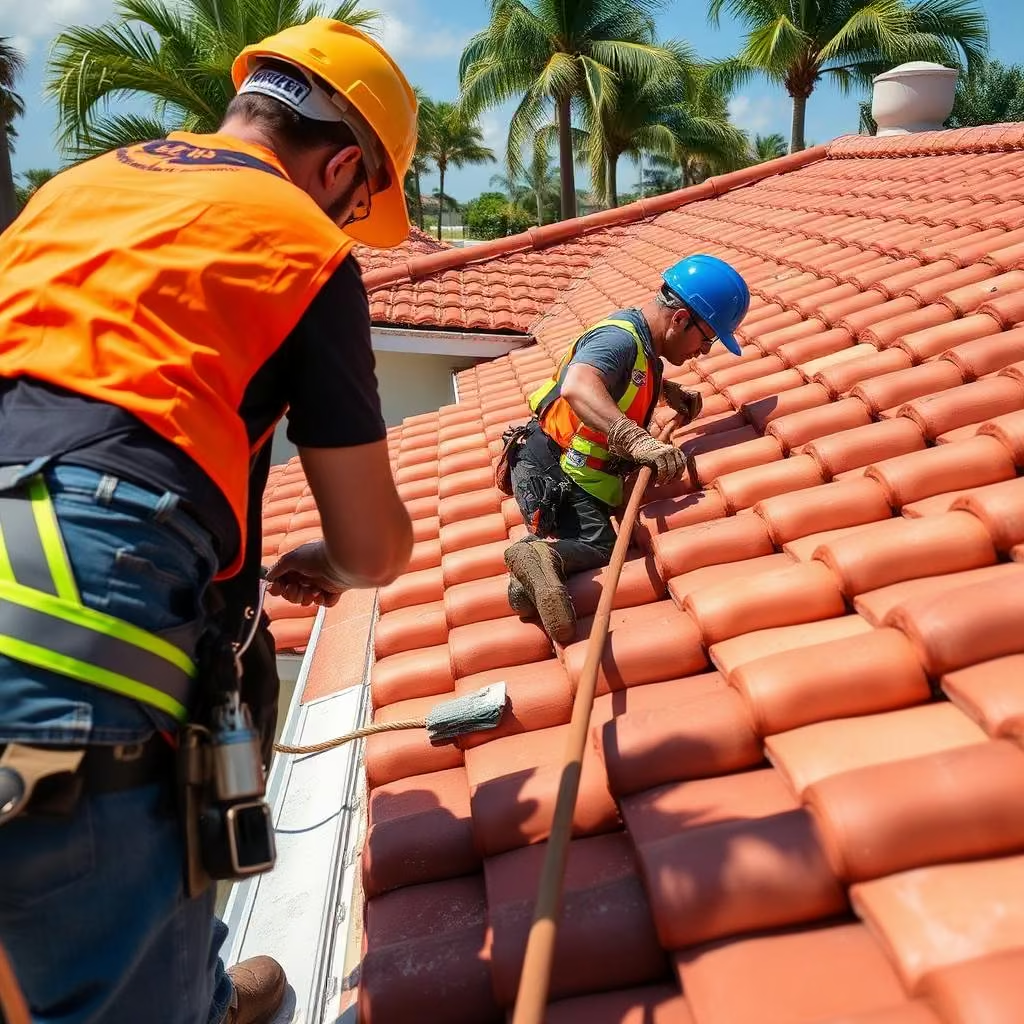
One of Florida’s most recognizable roofing materials, tile’s sheer weight’s part of what makes it so wind-resistant. When mechanically fastened rather than mortar-set, tile performs exceptionally well in hurricanes.
- Wind rating: 150-180 mph when mechanically fastened
- Lifespan: 40-50 years for concrete tile, 100+ years for clay tile
- Installed cost: $7-12 per square foot for concrete, $9-15 for clay
- Insurance impact: exempt from the 15-year age rule
Tile tradeoff’s weight: concrete tile runs 900 to 1,200 pounds per square, and that’s three to four times heavier than asphalt shingles. Older homes originally roofed with shingles sometimes need structural reinforcement before a tile installation, which can add $3,000 to $8,000 to the project.
TPO and Flat Roof Systems, Overlooked Option
Not every Florida home has a fully sloped roof. Additions, lanais, and some architectural styles have flat or low-slope sections that need a different approach entirely.
Thermoplastic polyolefin (TPO) is the most common choice for these sections, thanks to high solar reflectivity and heat-welded seams that create a fully bonded, watertight surface. Installed cost runs $5 to $8 per square foot, with a 15- to 25-year lifespan in Florida’s intense UV environment.
Side-by-Side Roofing Material Comparison
Reading through specs and price ranges section by section’s useful, but it may be easier to see how everything measures up at a glance. We’ve assembled key numbers from each roofing material into the table below.
| MATERIAL | WIND RATING | FLORIDA LIFESPAN | INSTALLED COST PER SQUARE FOOT | 15-YEAR INSURANCE RULE |
|---|---|---|---|---|
| Impact-resistant shingles (Class 4) | 130-150 mph | 20-30 years | $5-8 | Subject to rule |
| Metal standing seam | Up to 180 mph | 40-70 years | $7.50-14 | Exempt |
| Concrete tile | 150-180 mph | 40-50 years | $7-12 | Exempt |
| Clay tile | 150-180 mph | 100+ years | $9-15 | Exempt |
| TPO (flat) | 120-150 mph | 15-25 years | $5-8 | Subject to rule |
How Roofing Material Affects Your Insurance Premium
Most homeowners think of their homes’ roof purely as protection from the weather, but in Florida it also has a direct effect on what you pay for insurance every year. Two factors are in play, and you need to consider both before you choose a material.
- Wind mitigation credits—A licensed inspector documents features like your roof covering, deck attachment, and roof-to-wall connections on Florida’s official wind mitigation form. Stronger materials and connections translate into real premium discounts, sometimes 30 to 45 percent when combined with other hardening features. This inspection typically costs far less than the first year of savings it can unlock.
- 15-year age rule—Many Florida insurers require inspection or replacement of standard shingle roofs once they hit 15 years old, sometimes as a condition of renewal. This is one of the most overlooked reasons for which homeowners upgrade before their roof’s technically failing. Metal, tile, and slate are usually exempt from this rule entirely. Class 4 impact-resistant shingles address the underlying concern by offering documented wind and impact performance that insurers recognize.
Talk to your insurance agent before your roofing project begins, not after. Knowing which credits your new roof will qualify for can change how you weigh the upfront cost of one roofing material against another.
What to Ask Your Roofer Before You Sign
Not all metal roofs, tile roofs, or even impact-resistant shingles perform the same way, and the fine print matters more than the name of the roofing material on the estimate. Two roofs quoted with the same material label can perform very differently once wind gets involved so you should ask specific questions rather than compare bottom-line prices alone.
Before signing a contract, ask about:
- Specific wind rating or design pressure (DP) for the product being quoted—You can’t just go with the material category; generic “impact-resistant shingle” quotes should come with a named product and its documented rating.
- Underlayment type—It needs to be upgraded for Florida’s climate; this layer does more work than most homeowners realize, especially on tile roofs where it wears out well before the tiles do.
- Attachment method and fastening schedule—The difference between a six-nail and four-nail pattern, for example, can change a shingle roof’s real-world wind performance.
- Flashing and edge details—This is where most storm failures start; it’s the detail most easily rushed on a lower bid.
- Warranty terms and what specifically voids them—Labor warranties, manufacturer warranties, and wind warranties are often three separate things with three separate conditions.
A roofing contractor who answers these questions specifically rather than in generalities is usually one who has the expertise to install roofs that hold up when it matters.
Which Roofing Material’s Right for Your Central Florida Home?
There’s no single correct answer for every Florida home, but most homeowners in Orlando, Tampa, and Winter Park will want to weigh cost against real hurricane protection. Impact-resistant shingles need to be considered first before evaluating pricier alternatives.
You’ll probably choose:
- Impact-resistant shingles—If you want strong hurricane performance at the most accessible price point, this is the right fit for most Florida homeowners replacing a roof today
- Metal—If you want the highest wind rating, the best energy efficiency, and don’t mind the higher upfront cost
- Tile—If longevity’s your top priority and your roof structure can support the added weight.
- TPO—If your home has flat or low-slope sections like an addition or lanai that a sloped roofing material isn’t suited for
Whichever roofing material you’re leaning toward, a professional inspection of your current roof’s condition and your home’s structure will tell you far more than any general comparison. Keep in mind that not every home’s a good candidate for every roofing material. Our roof replacement team can walk you through which option fits your specific home.
Reference Resources
- Florida Building Commission: 8th Edition (current version, 2023)
- Miami-Dade County: Product Control Search
- National Roofing Contractors Association (NRCA): Roofing Guidelines: Roofing Materials
Frequently Asked Questions about Best Roofing Material for Florida Homes
Homeowners across central Florida tend to ask the following questions once they start comparing roofing materials.
What’s the best roofing material for Florida hurricanes?
For most homeowners, Class 4 impact-resistant shingles offer the best overall balance of hurricane protection and cost. Metal standing seam offers the highest wind rating, up to 180 mph, and tile offers excellent wind resistance along with the longest lifespan, both at higher price points.
Do impact-resistant shingles really make a difference?
Yes. Class 4 shingles are tested to withstand impact from hail-sized debris and typically carry wind warranties of 130-150 mph, a step up from standard shingles, but at a fraction of the cost of metal or tile.
Is a metal roof worth the extra cost in Florida?
For some homeowners, yes, especially if planning to stay in the home long-term. The combination of a longer lifespan, exemption from the 15-year insurance rule, and lower cooling costs can offset the higher upfront price over time.
Do I need Miami-Dade NOA approval for a roof in Orlando or Winter Park?
No. The stricter Miami-Dade Notice of Acceptance (NOA) standard applies specifically to the High-Velocity Hurricane Zone (HVHZ), primarily Miami-Dade and Broward counties. Orlando, Tampa, and Winter Park fall under the standard Florida Building Code, which most major manufacturers’ products already meet.
Does a new roof lower my homeowners insurance?
It can. A wind mitigation inspection will document the features that qualify for premium credits, and upgrading to Class 4 impact-resistant shingles is one of the most cost-effective ways to qualify for those discounts.
Ready to Find the Right Roof Material for Your Home?
For most Florida homeowners, impact-resistant shingles hit the best balance of hurricane protection, cost, and long-term value though metal and tile are strong options depending on your budget and how long you plan to stay. A professional assessment of your roof’s condition, structure, and wind exposure will tell you far more than any general comparison can.
FAS Exteriors serves homeowners across central Florida. We’ve earned an A+ accreditation from the Better Business Bureau (BBB).
Schedule your free, in-home assessment before hurricane season arrives, and one of our licensed Florida roofing professionals will come out, look at your home’s roof, and give you an itemized quote with no pressure and no salesperson tricks.