














Florida homeowners in Orlando, Tampa, and Winter Park who completed qualifying energy upgrades by December 31, 2025 can still claim up to $3,200 in federal tax credits on their 2025 return. The credit itself has expired for new work, but for anyone who acted before the deadline, filing correctly is still worth real money.
Key Takeaways
- The Energy Efficient Home Improvement Credit (Section 25C) covered 30% of qualifying costs, up to $3,200 per year, for energy-efficient upgrades to an existing primary residence.
- The “One Big Beautiful Bill,” signed July 4, 2025, ended the credit after December 31, 2025, seven years ahead of the original 2032 deadline set by the Inflation Reduction Act.
- 2025’s the final eligible tax year; if you filed an extension, you have until October 15, 2026 to file your 2025 return and still claim it, but the improvement itself had to be installed by December 31, 2025. Extensions don’t extend the installation deadline.
- The credit’s nonrefundable with no carry-forward: it can only reduce what you owe, and any unused amount’s forfeited.
- Labor costs are treated differently depending on the improvement. Installation labor counts toward the credit for HVAC systems and heat pumps. It doesn’t count for windows, doors, skylights, or insulation; only the material cost qualifies for those.
- Roofing hasn’t been eligible since 2023, even ENERGY STAR-rated products.
- Florida utility rebates from OUC, TECO, Duke Energy, FPL, and Winter Park’s municipal electric utility remain active in 2026 and can offset new projects even without the federal credit.
- File IRS Form 5695 with your tax return to claim the credit.
Table of Contents
What’s the Energy Efficient Home Improvement Credit?
The Energy Efficient Home Improvement Credit, also known as Section 25C of the tax code, provided homeowners up to $3,200 per year for qualifying energy-efficient upgrades to their primary residence, covering 30% of eligible costs beginning January 1, 2023.
This was a dollar-for-dollar reduction of your tax bill, not a deduction, and it reset annually; homeowners who spread improvements across multiple years could claim the maximum each time. The credit applied only to an existing home that homeowners lived in, not new construction.
Why the Deadline Matters in 2026
The credit expired after December 31, 2025. Only improvements installed and placed in service by that date are eligible, and there’s no carryforward for unused amounts.
Per IRS Fact Sheet FS-2025-05, the “placed in service” date, meaning completion of installation, determines eligibility, not the purchase or payment date. A product bought in December 2025, but installed in January 2026 doesn’t qualify for the 2025 credit.
If you filed a federal extension, you have until October 15, 2026 to file your 2025 return and claim the credit, but that only extends your filing deadline, not the installation cutoff.
How Much Can You Claim?
The credit breaks into two categories with separate annual caps that stack, which means the ceiling depends entirely on which improvements you made in a given year, not a flat 30 percent of your total home improvement spending. Understanding which bucket a project falls into is what separates a modest credit from the full $3,200.
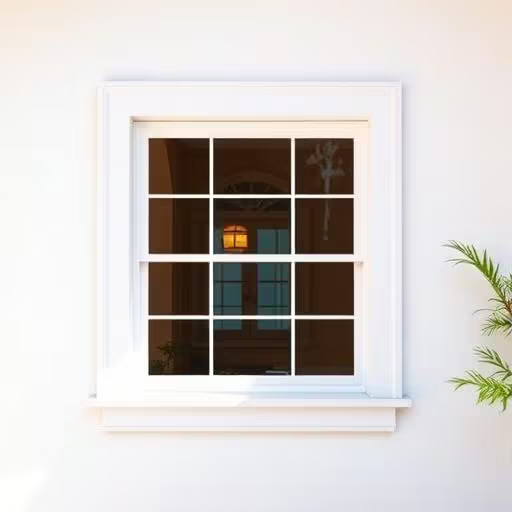
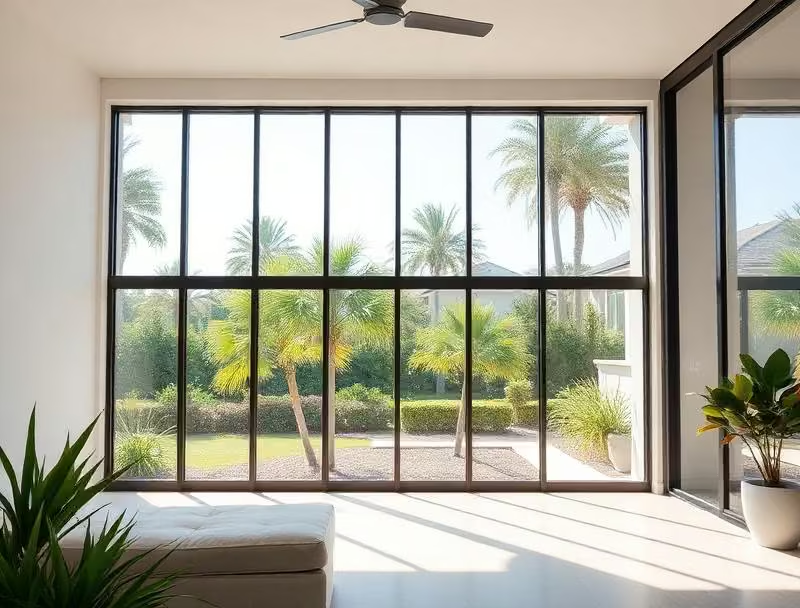
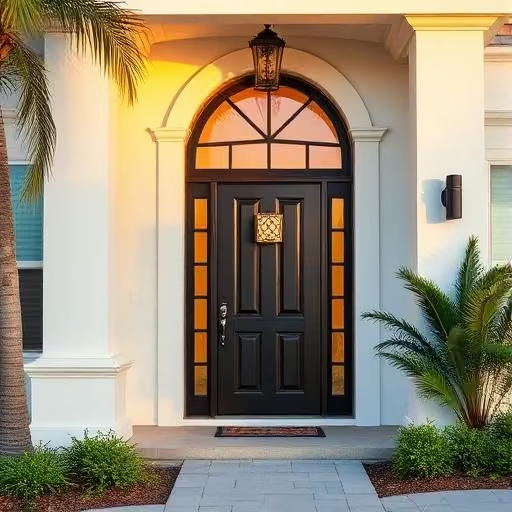
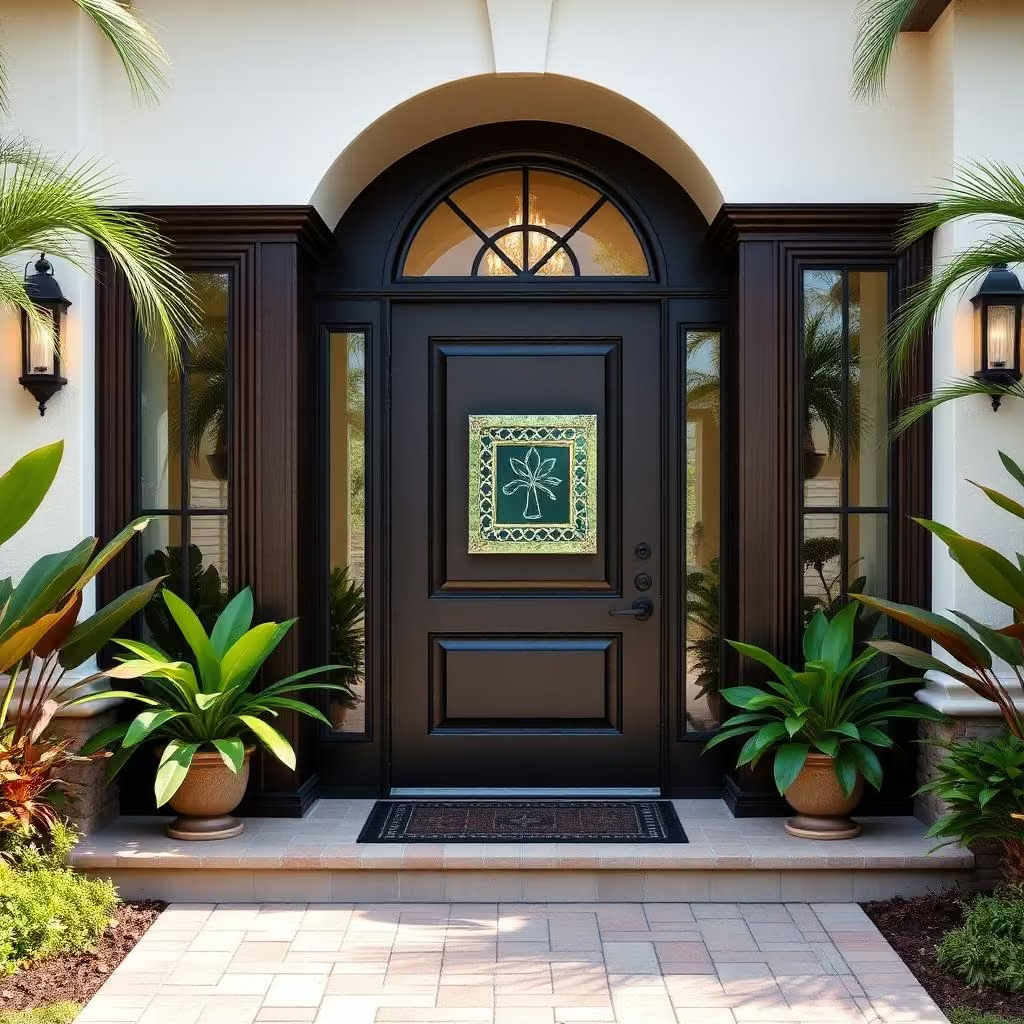
Homeowners who updated their home’s exterior with new energy-efficient windows or ENERGY STAR-rated exterior doors fall into Category 1 alongside insulation and qualifying heating, ventilation, and air conditioning (HVAC) equipment while heat pumps are in a separate Category 2 bucket with a higher individual cap. Because the two categories don’t share a single annual limit, a homeowner could replace windows and install a heat pump in the same tax year and claim close to the full amount across both.
Category 1: Up to $1,200 per Year, Combined
This bucket covers most exterior and building-envelope upgrades along with qualifying HVAC equipment and home energy audits.
- Exterior windows and skylights (up to $600)
- Exterior doors ($250 per door, $500 total)
- Insulation materials and air sealing (no subcap of its own)
- Qualifying central air conditioners, furnaces, boilers, and water heaters
- Home energy audits (up to $150)
If your 2025 project involved replacing windows or installing new exterior doors in Orlando, Tampa, or Winter Park, this is almost certainly the category your work falls under; see the windows, doors, and skylights section below for how the material-only rule affects what you can claim.
Category 2: Up to $2,000 per Year
This bucket applies exclusively to heating and cooling equipment that runs on heat pump or biomass technology.
- Qualifying heat pumps (air-source and geothermal)
- Heat pump water heaters
- Biomass stoves and boilers
This bucket’s specific to heating and cooling equipment rather than the building envelope so it applies independently of any exterior work. A homeowner who upgraded a heat pump in 2025 can claim it here in full, separate from whatever they spent on windows, doors, or insulation that same year.
A homeowner who installed a qualifying heat pump and replaced windows in 2025 could claim the full $3,200: $2,000 for the heat pump, $1,200 for the windows and any other Category 1 work.
What Qualifies and What Doesn’t
Each category above has its own eligibility rules, efficiency thresholds, and different treatment for labor costs. This is where most claims can go wrong: it’s easy to assume a blanket 30 percent applied to everything on an invoice when in practice the IRS draw a hard line between products that qualify and the labor to install them.
If you’re budgeting for new windows, exterior doors, or a roof replacement in 2026, you need to understand these distinctions now since utility rebates down follow different rules than the expired federal credit did.
Windows, Doors, and Skylights
Windows and skylights needed ENERGY STAR Most Efficient certification; doors needed to meet applicable ENERGY STAR requirements. In Florida’s climate, a low Solar Heat Gain Coefficient matters as much as U-factor.
Only the material cost counts here; installation labor’s excluded. If a contractor quoted a bundled price, taxpayers had to make a reasonable allocation between the qualifying materials and the nonqualifying labor.
Insulation and Air Sealing
Insulation and air sealing materials needed to meet International Energy Conservation Code (IECC) standards in effect two calendar years prior to installation. As with windows and doors, only material costs qualify; labor’s excluded.
One quirk you should know about: insulation’s also exempt from the PIN/QM code requirement, unlike most other categories.
HVAC Systems and Heat Pumps
Qualifying equipment had to meet the Consortium for Energy Efficiency (CEE)’s highest efficiency tier for the year it was installed. Unlike windows, doors, and insulation, both materials and installation labor count toward the credit for heat pumps, central air conditioning (AC), furnaces, boilers, and water heaters.
Home Energy Audits
A professional audit qualified for up to $150. It’s one of the credit’s most underused provisions and often the best starting point for identifying which other upgrades pay off.
Roofing: Ineligible
Unfortunately, new roofing hasn’t qualified for this credit since 2023. An earlier version of Section 25C briefly covered ENERGY STAR-rated metal and reflective “cool roof” asphalt shingles, but that provision was dropped when the Inflation Reduction Act rewrote the credit. It was never reinstated including in the version that just expired.
If you’re weighing a roof replacement, it may still pay off through reduced cooling costs or wind-mitigation insurance discounts, but not through this federal credit.
2025 Qualified Manufacturer (QM) Requirement
For property placed in service in 2025, taxpayers generally needed a four-character QM code or full product PIN on their return, sourced from the manufacturer or installing contractor. The exception is insulation and air sealing materials, which don’t require a PIN or QM code at all.
For everything else: windows, doors, HVAC, and heat pumps, missing the code can mean that the IRS will deny that portion of the claim.
What Changed and Why
Before the IRA expanded it in August 2022, this was a $500 lifetime credit known as the Nonbusiness Energy Property Credit. The IRA rebuilt it into an annual $3,200 credit intended to run through 2032.
The “One Big Beautiful Bill Act,” signed July 4, 2025, cut that short, ending Section 25C (and the separate Section 25D solar/battery credit) after December 31, 2025, seven years early.
How to Claim the Credit on Your 2025 Return
Filing correctly matters as much as qualifying in the first place; the IRS has denied claims over missing QM codes and unallocated labor costs so it pays to get the paperwork right the first time. If a contractor installed your windows or doors in 2025, start by pulling the original invoice and confirming that it separates material and labor costs; if it doesn’t, ask the installer for a written breakdown before you file.
Follow the steps below walk to get ready for what the IRS requires.
- Gather documentation—Include receipts, contractor invoices, and manufacturer certification statements for each qualifying improvement, with material and labor costs itemized separately where required
- Confirm your QM codes—Check the product label for any windows, doors, or HVAC/heat pump purchases in 2025 (not needed for insulation) or ask your contractor or the manufacturer for the codes
- File IRS Form 5695—Include it with your tax return
- Apply the credit to your tax liability—Keep in mind that it’s nonrefundable with no carryforward
- Keep records—Retain for at least three years in case of an IRS inquiry
Florida Utility Rebates Still Available in 2026
The federal credit’s gone for new work, but utility programs remain active and are the main incentive left for 2026 projects.
- Orlando Utilities Commission (OUC)—Rebates up to approximately $1,150 for high-efficiency heat pump AC systems plus smaller rebates for insulation and other upgrades through OUC’s Efficiency Delivered program. Verify current terms at OUC before scheduling work.
- Tampa Electric (TECO)—The Heating and Cooling Program pays a tiered rebate for qualifying systems (about $40-550 per unit depending on efficiency tier at this time), plus a free home energy audit and periodic rebates for attic insulation and duct repair. Confirm current tiers at TECO.
- Duke Energy Florida—Requires a free home energy check within 24 months of the work. Historically offered up to $1,000 for strip-heat-to-heat-pump conversions, $500 for heat pump replacement, $300 for AC replacement, and insulation and duct-repair rebates. Verify current amounts with Duke Energy: Florida before committing to a project.
- Winter Park Electric Utility—Winter Park runs its own municipal electric utility and offers a free home energy use audit, after which qualifying attic insulation and duct repair upgrades are eligible for rebates issued as a bill credit. Check the Winter Park program.
- Florida Power & Light (FPL)—A flat instant rebate, historically around $200, on qualifying HVAC replacements. Take a look at FPL’s Residential HVAC Program.
Program terms and dollar amounts change periodically so you should confirm current figures with each utility before signing a contract.
Florida’s HEAR and HOMES Rebates: Still Not Launched
Florida’s approximately $346 million IRA allocation for Home Electrification and Appliance Rebates (HEAR) and Home Efficiency Rebates (HOMES) remains in prelaunch, registration-only status at this time. If and when it launches, income-eligible households could see rebates up to $8,000 for a qualifying heat pump and up to $14,000 total per household.
Be sure to monitor the Florida Department of Agriculture and Consumer Services (FDACS) Florida Energy Saver Program portal for updates. And treat any offer claiming that these rebates are available today with skepticism; they aren’t just yet.
Common Mistakes that Cost Homeowners Money
Most of the errors below come down to the same root cause: assuming that this credit worked like a simple 30 percent-off coupon on the total invoice, when in practice it had strict rules about what counted, when it counted, and how it had to be documented. Homeowners who worked with a licensed exterior contractor like FAS Exteriors on their windows, doors, or roofing in 2025 were generally in a better position to avoid these pitfalls because experienced installers knew which invoices the IRS would accept.
- Assuming that the purchase date’s what counts; actually, it’s the installation (“placed in service”) date
- Forgetting the QM code for windows, doors, or HVAC purchased in 2025
- Assuming that labor counts for windows, doors, or insulation; it doesn’t, and only materials count for those categories
- Treating the credit as refundable; it only offsets what you owe
- Assuming that a new roof qualifies; it hasn’t since 2023
- Claiming a second home or rental property; only a primary residence qualifies
Reference Resources
- ENERGY STAR®: Federal Tax Credits for Energy Efficiency
- Florida Department of Agriculture and Consumer Services: Florida Energy Saver Program
- Internal Revenue Service (IRS): Energy Efficient Home Improvement Credit
- Internal Revenue Service (IRS): FAQs for modification of sections 25C, 25D, 25E, 30C, 30D, 45L, 45W, AND 179D under Public Law 119-21, 139 Stat. 72 (July 4, 2025), commonly known as the One, Big, Beautiful Bill (OBBB)
- U.S. Department of Energy (DOE): Home Upgrades
Frequently Asked Questions about Energy Efficient Home Improvement Credit
We’ve assembled the questions that central Florida homeowners ask most often about the energy efficient home improvement credit, based on what we hear from customers across Orlando, Tampa, and Winter Park. If your situation isn’t covered here, a certified public accountant (CPA) familiar with home energy credits would be the best resource for anything specific to your tax return.
Can I still claim the energy efficient home improvement credit in 2026?
Only for improvements completed by December 31, 2025, claimed on your 2025 return (Form 5695). If you extended your filing deadline, you have until October 15, 2026 to file.
Does the credit cover installation labor?
It depends on the improvement. Labor counts for HVAC and heat pump installations. It doesn’t count for windows, doors, skylights, or insulation; only the product/material cost qualifies for those.
Does a new roof qualify for this credit?
No. Roofing materials including ENERGY STAR-rated options haven’t been eligible under Section 25C since 2023.
Do I need a QM code for insulation?
No, insulation and air sealing materials are exempt from the PIN/QM code requirement, unlike windows, doors, and HVAC equipment.
Is the Residential Clean Energy Credit (solar) also expired?
Yes, it ended for new expenditures after December 31, 2025, under the same legislation. Unlike Section 25C, unused Residential Clean Energy Credit amounts can be carried forward to future tax years.
What to Do Now
If you completed qualifying work in 2025, gather your documentation, confirm your QM codes, and talk to a tax professional before you file (or before October 15, 2026, if you extended). We’re not tax professionals; for guidance on your specific return, talk to a CPA.
If you’re planning a 2026 project, check current rebates with your utility whether OUC, TECO, Duke Energy, FPL, or Winter Park Electric Utility depending on where you live, before signing a contract. Also, be sure to prioritize upgrades that pay off through Florida’s cooling costs regardless of incentives.
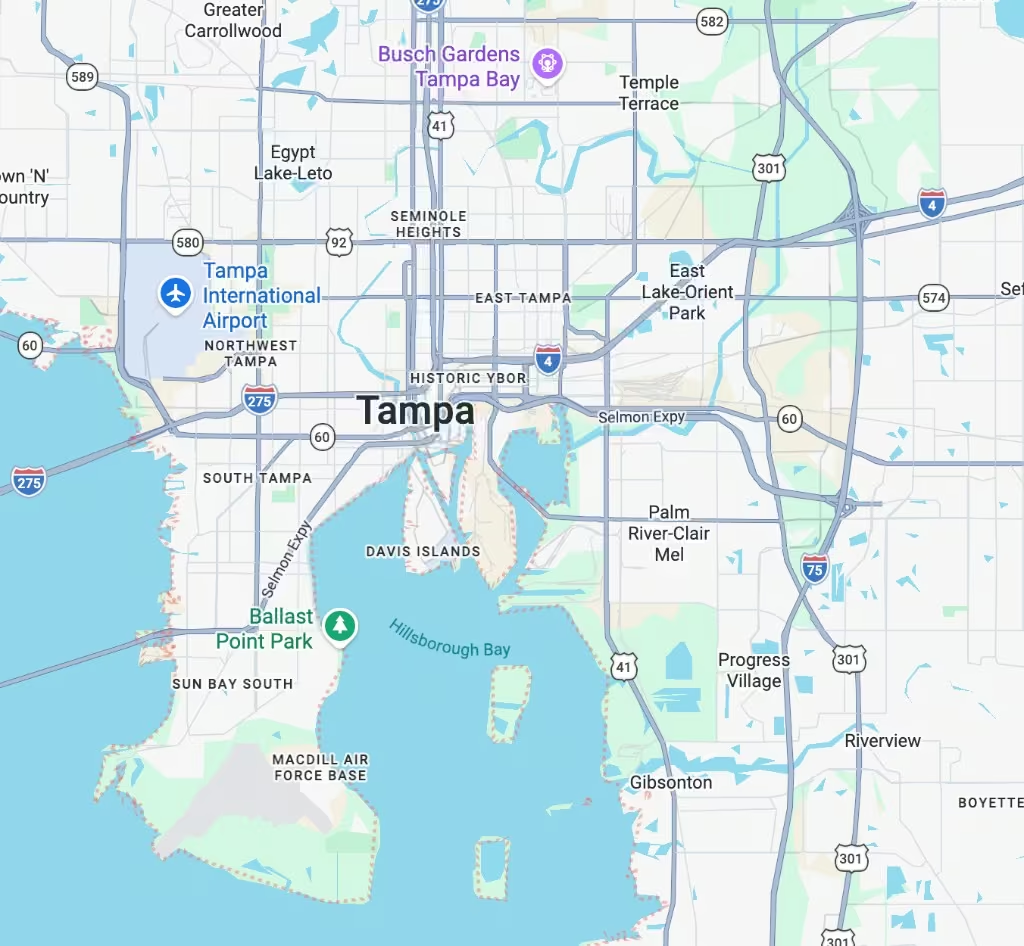
FAS Exteriors serves homeowners across central Florida, in the greater Orlando, Tampa, and Winter Park areas. We’ve earned an A+ accreditation from the Better Business Bureau (BBB).
If you’re considering a window, door, or roofing project, schedule a free, in-home assessment, and one of our licensed Florida professionals will come out, look at your home’s exterior, and give you an itemized quote with no pressure and no salesperson tricks.