

















Roof flashing problems are the number one cause of leaks in central Florida homes, and most homeowners have no idea that the damage is happening until water shows up on their ceilings, in their attics, or behind their walls.
Key Takeaways
- Roof flashing rather than shingles is the leading cause of roof leaks in Florida homes.
- Florida’s UV radiation, wind-driven rain, thermal cycling, and salt air accelerate flashing deterioration faster than nearly any other climate in the country.
- The highest-risk locations are chimney flashing, valley flashing, and pipe boot flashings.
- Visible rust, lifted edges, caulk-only seams, interior ceiling stains, and musty odors are all warning signs that are detectable without climbing on the roof.
- Missing kickout flashing and caulk-dependent terminations are the most common installation failures seen across Florida.
- Sealants around flashing typically fail within 10-15 years, even when the metal itself is still intact.
- Schedule professional inspections twice a year: before and after hurricane season and after any major storm.
- Rusted or deteriorated flashing must be replaced under the Florida Building Code, not patched or reused.
- Catching flashing failure early is almost always a repair of a few hundred dollars; ignoring it can lead to structural rot, mold, and a full roof replacement.
Table of Contents
What’s Roof Flashing and Why Does It Fail So Often in Florida?
Your roof has weak points: places where a chimney punches through the surface where two slopes collide in a valley or where the slope meets a vertical wall. Shingles and tiles can’t seal those transition points on their own.
Roof flashing’s the thin metal material, typically galvanized steel, aluminum, or copper, installed at every one of those vulnerable joints. Its job is simple but vital: it directs water away from vulnerable points so that when it’s properly installed and sealed, water flows safely off the roof.
Florida makes that job harder than almost anywhere else in the country. The sun beats down year-round, afternoon storms soak shingles again and again, hurricane season brings wind that lifts edges and drives rain sideways into places it was never meant to go, and heat causes roofing materials to expand and contract, loosening fasteners and weakening seals over time.
As Florida Building Code training materials put it, roof problems such as leaks or wind blow-off rarely occur in the field of the roof. Vulnerable areas for water intrusion need to be protected through proper flashing installation.
When that protection breaks down, water finds the path of least resistance and travels, sometimes across rafters and decking, well before it ever shows up as a stain on your ceiling.
Where Roof Flashing Lives on Your Roof
Before you can identify roof flashing problems, you need to know where to look. Flashing’s installed in several key locations that are prone to leaks including:
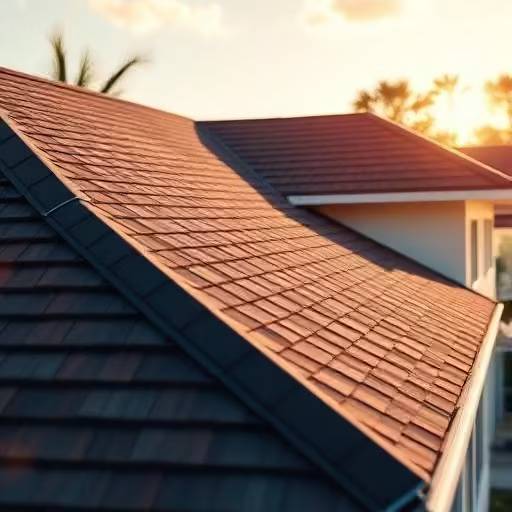
- Roof valleys where two sloping planes meet and form a channel that handles heavy water flow
- Chimneys that require a multipart system of step flashing and counter flashing
- Plumbing and attic vents sealed with a flashing boot or collar around each pipe penetration
- Skylights that rely on an integrated flashing kit around their full perimeter
- Drip edges along the eaves and rakes that direct water away from the fascia and into the gutters
- Roof-to-wall intersections where step flashing’s woven into shingle courses to keep water from running into the wall
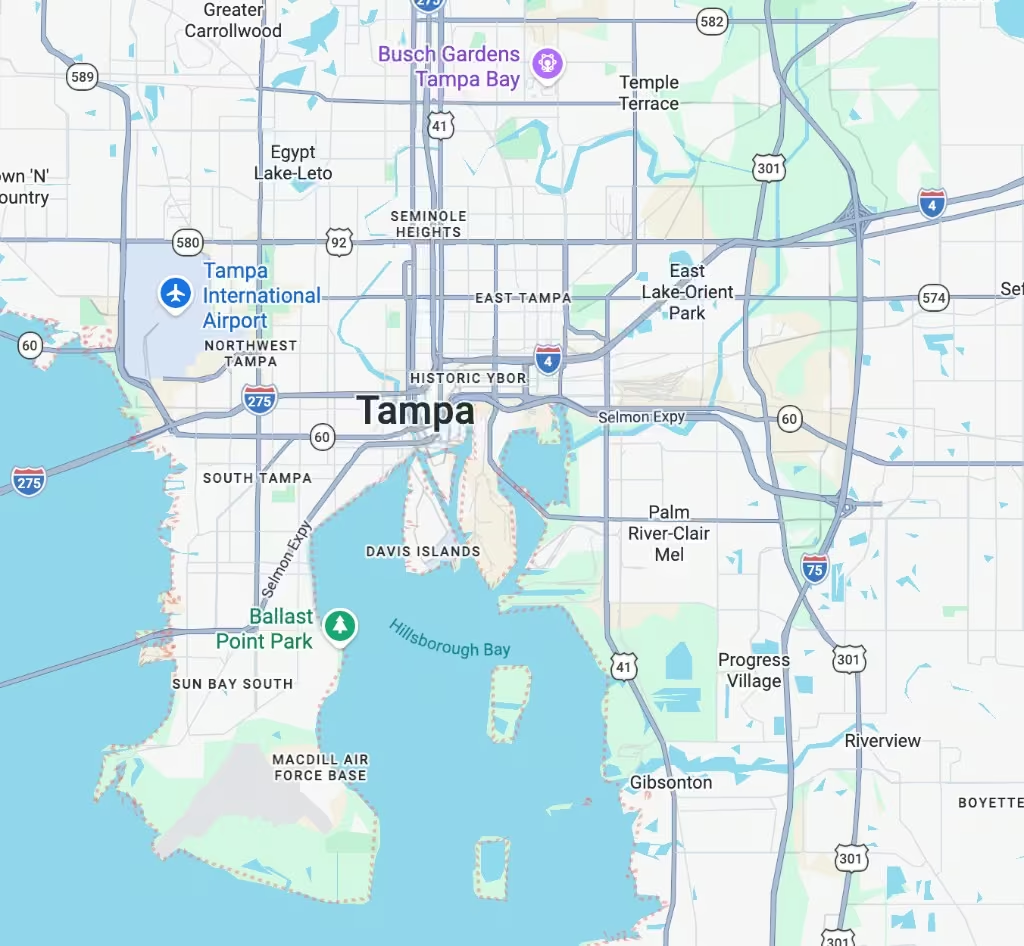
Every one of these spots is a potential entry point when flashing begins to fail. Homeowners in Orlando, Tampa, and Winter Park are managing the same exposure: relentless seasonal storms, salt-laden air from nearby coastal areas, and roofs that often go years without a close look.
Why Florida Conditions Create Roof Flashing Problems Faster
The same forces that make our state a great place to live: abundant sunshine, warm temperatures, and dramatic afternoon storms work constantly against the metal, sealants, and fasteners holding your flashing in place.
Brutal Climate Combination
The compounding effect of multiple stressors working simultaneously wear flashing down in Florida.
- Ultraviolet (UV) radiation—It constantly degrades the sealants around flashing, causing them to become brittle and crack. Florida’s year-round sun dries out and cracks these sealants, allowing water intrusion during heavy rain.
- Thermal cycling—Flashing metal and surrounding roofing materials expand in the afternoon heat and contract overnight. Over thousands of cycles, this relentless movement pulls fasteners loose and opens gaps at seams.
- Wind-driven rain—During Florida storms, rain comes sideways, pushed by wind, looking for the smallest opening. Even a hairline gap in improperly sealed flashing becomes a highway for water intrusion.
- Salt air and humidity—These are especially destructive along the Gulf and Atlantic coasts near Tampa and Palm Harbor. Salt-laden air accelerates corrosion on galvanized steel. Persistent humidity means that moisture that gets behind flashing has nowhere to dry out.
Age and Sealant Failure
The metal component of flashing’s durable, but the sealant isn’t. The caulk and sealant used to seal flashing edges dry out and crack over 10 to 15 years, creating openings for water. This is why ongoing roof maintenance is so critical.
Many Orlando and Winter Park homes built in the late 1990s and early 2000s are now entering the window in which sealant failure’s an expectation.
Florida Building Code Sets the Baseline
The Florida Building Code requires flashing to be installed at wall and roof intersections, at gutters, wherever there’s a change in roof slope or direction, and around roof openings. Metal flashing’s required to be corrosion-resistant and meet minimum thickness specifications.
All roof flashing and terminations must be designed and installed to resist the wind-load requirements for High-Velocity Hurricane Zones (HVHZ) under the Florida Building Code.
Code compliance sets a floor rather than a ceiling. Poor workmanship, shortcuts on sealant, and reused materials can create roof flashing problems even on relatively new roofs.
Nine Signs of Roof Flashing Failure in Florida
Most homeowners don’t need to climb on the roof to conduct a useful first inspection. A ground-level inspection with binoculars, combined with an attic check after heavy rain, will reveal the most common warning signs without having to risk climbing onto the roof and falling.
1. Visible Rust or Corrosion on the Metal
Any visible rust at the metal strips in roof valleys or around your chimney’s a clear indicator that the flashing’s corroding and its integrity’s compromised. Rust can be problematic even if it’s not widespread. Even a small corroded patch can develop pinholes that allow water to seep through steadily with every rainstorm.
2. Lifted, Bent, or Loose Edges
Flashing that’s pulled away from the roof surface or from a wall creates an open gap. If drip edge or edge flashing starts to lift, storms could push rain under the roofing system.
From the ground, look for any metal that appears buckled, bent outward, or no longer sitting flush against the surface it’s meant to seal.
3. Caulk that’s Doing All the Work
This one’s easy to miss because it looks tidy from a distance. A straight bead of caulk at the wall that looks like it’s doing all the work’s a red flag because caulk alone isn’t a structural solution.
Properly installed flashing uses mechanical fastening and overlapping layers. When a roofer uses sealant as the primary barrier rather than as support to the detail, that barrier will eventually crack and fail in Florida’s heat.
4. Dark Streaks on Stucco or Siding Above the Roofline
If you see dark streaks on stucco right above the roof line or bubbling paint indoors on that wall it indicates that water’s getting behind the flashing and running down the wall assembly. Stucco exteriors are prevalent in Orlando and Winter Park, and this sign needs watching for after rainy season begins each June.
5. Water Stains on Interior Ceilings or Walls
A stain on your living room ceiling may have originated from a roof penetration point, flashing failure, or damaged shingle on the complete opposite side of your home. In Florida’s rainy season, even a small roof vulnerability can allow significant amounts of water to enter over time, soaking insulation, saturating drywall, and creating ideal conditions for mold growth, all hidden inside your walls and attic.
Don’t simply repaint over a ceiling stain and move on. That stain’s a symptom rather than the problem itself.
6. Wet or Discolored Attic Insulation
Interior damage often appears before anything’s visible from outside. A water stain on the ceiling or mold in the attic can mean a flashing failure that isn’t obvious until someone gets into the attic.
After any heavy storm in Tampa or Palm Harbor, a quick attic check, looking for wet insulation, water trails on the underside of the decking, or daylight showing through, is one of the fastest ways to catch a developing roof flashing problem.
7. Granule Buildup in Gutters After a Storm
This secondary indicator with heavy granule loss from shingles near flashing points suggests that the shingles are under elevated stress. Often it’s because water’s repeatedly cycling behind the flashing and degrading the adjacent roofing material from underneath.
8. Lifted, Bent, or Loose Edges
A roofline that appears to sag, dip, or visually wave in sections is a serious structural red flag, typically indicating that the underlying roof deck has been weakened by long-term moisture exposure or rot. This is what an unaddressed roof flashing problem looks like after months or years of slow water intrusion.
At this stage, a localized repair’s rarely sufficient; a full structural assessment’s immediately required.
9. Lifted, Bent, or Loose Edges
When moisture from a flashing failure saturates insulation and wood framing, Florida’s humidity dramatically accelerates mold growth. A leak in your bedroom could originate from damaged flashing near your chimney 15 feet away. A musty smell in one room doesn’t always point to an obvious nearby source.
Three Roof Flashing Locations that Fail Most Often in Florida
Not all flashing’s created equal, and not all locations carry the same risk. The following three spots account for the overwhelming majority of roof flashing problems diagnosed on Florida homes each year.
Chimney Flashing
Among the most common sources of roof flashing problems in Florida, chimneys require a multilayer system: base flashing, step flashing up the sides, counter flashing, and often a cricket, the small peaked structure behind the chimney that diverts water around it. Any one of these components can fail independently.
Watch for rust staining at the base of the chimney, white efflorescence on the masonry, or interior water stains directly below the chimney chase.
Valley Flashing
Roof valleys collect the most water during heavy rain and must remain tightly sealed. Any separation, rust, or missing sealant can allow water to work its way underneath the shingles.
From the ground, valley flashing should look uniform and flush. Any rippling, visible gaps, or dark discoloration running along the valley line merits a professional inspection.
Pipe Boot and Vent Flashing
Plumbing vent boots, the rubber or metal collars that seal around pipes penetrating the roof, are among the most common failure points in Central Florida. The rubber gaskets used in many pipe boots degrade quickly under UV exposure and Florida heat cycles.
Damage around pipe boots, vents, and chimney flashing’s a frequent source of leaks that homeowners often overlook entirely until interior damage has already spread.
Florida-Specific Roof Flashing Problems Worth Knowing
Beyond general wear and UV degradation, Florida homes have a distinct set of flashing failure patterns tied to regional building practices, installation shortcuts, and code evolution over the decades. These are the ones that a qualified inspector will look for first.
Missing Kickout Flashing
In Florida, one of the most common roof flashing problems is missing kickout flashing, a small but critical piece of metal that diverts water away from where a roof edge meets a wall.
Without it, water runs directly behind the wall cladding, saturating the sheathing and framing in a way that often goes unnoticed for years. This is prevalent in older Tampa and Palm Harbor homes built before stricter code enforcement took hold.
Caulk-Dependent Terminations
Many budget repairs in Florida rely on caulk to close gaps at flashing terminations. Terminations that rely on caulk instead of a mechanical stop are one of the most common failures identified in Florida. They’re also among the first things that fail when sealants break down under UV exposure after a few seasons.
Reverse-Lapped, Water-Resistive Barrier
A less visible but serious installation error, a reverse-lapped, water-resistive barrier’s common in Florida. This means that the underlayment has been installed so that upper layers lap under lower layers instead of over them, directing any water that gets behind the flashing into the wall assembly rather than away from it.
What to Do When You Suspect Roof Flashing Problems
Suspecting a problem isn’t the same as knowing where it is or how serious it has become. Working through these steps in order gives you and your roofing contractor the clearest possible picture before anyone sets foot on the roof.
- Step 1: Do a safe ground-level scan
Use binoculars to examine every transition point on the roof: valleys, chimney base, skylights, vent pipes, wall joints, and drip edges. Note anything lifted, discolored, rusted, or irregular. - Step 2: Check the attic
After the next rain, look for water trails, wet insulation, or any light coming through from outside. Photograph what you find; it will help your roofer to trace the source faster. - Step 3: Document interior water stains
Note location, size, and whether the stain’s new or growing. This information helps a roofing professional to connect the interior symptom to the exterior source. - Step 4: Call a licensed Florida roofing contractor
Don’t ignore a new stain, yellowing, or bubbling paint on your ceiling. Have a roofing professional trace the source before the damage expands. - Step 5: Request a written inspection report
A reputable contractor will document what was found, where, and what repair scope’s recommended. This is also needed for insurance purposes.
Under the Florida Building Code, existing vent flashing, metal edgings, drain outlets, collars, and metal counter flashings that are rusted, damaged, or deteriorated must be replaced rather than reinstalled. You should question any estimate that proposes reusing old flashing components.
How Often Should Florida Homeowners Inspect for Flashing Problems?
Professional inspections should happen twice yearly, ideally before and after hurricane season, to identify loose fasteners, damaged flashing, and early signs of wear that could lead to leaks during heavy rain.
That framework’s the right baseline for homeowners in Orlando, Tampa, and Winter Park:
- Preseason (May)—Before tropical storms arrive, verify that all flashing’s sealed, properly seated, and free of rust or lifting
- Postseason (November)—After hurricane season, assess any storm-related movement, impact damage, or sealant degradation
- After any major storm—Don’t wait for an annual check if a significant storm has passed through; even a storm that causes no visible shingle damage can loosen flashing or open gaps at sealed terminations
The cost of a professional inspection typically ranges from $200 to $400, far less than emergency repairs that could have been prevented.
Reference Resources
- Florida Building Commission: 8th Edition (2023)
- Insurance Institute for Business and Home Safety (IBHS): Disaster Safety Strategy: 1. Lead with the Roof
- National Institute of Building Sciences (NIBS): About
- National Roofing Contractors Association (NRCA): The NRCA Roofing Manual
Frequently Asked Questions about Roof Flashing Problems in Florida
Florida homeowners often ask the following questions in trying to figure out the signs of roof flashing failure in our state.
How long does roof flashing last in Florida?
The metal component itself can last 20-30 years, but the sealants and caulk surrounding it typically need attention every 10-15 years. Florida’s UV exposure and heat cycles shorten that window significantly compared to cooler climates.
Can I spot roof flashing problems without getting on the roof?
Yes. Binoculars and a careful ground-level inspection of valleys, chimney bases, wall junctions, vent pipes, and drip edges will reveal the majority of visible warning signs. Be sure to conduct an attic inspection after rain.
Is a ceiling water stain always from flashing?
Not always, but flashing failure’s one of the most common causes. Other possibilities include pipe leaks, damaged shingles, or condensation. A professional inspection will trace the actual source.
How much does flashing repair cost in Florida?
A localized flashing repair addressing one chimney or a few vent boots typically runs $300-900, depending on access, materials, and scope. Addressing flashing problems during a full roof replacement costs considerably less than repairing individual failures on an aging roof one at a time.
Should flashing be replaced when getting a new roof?
Yes. Reusing old flashing under new roofing materials defeats much of the investment in a new roof. The Florida Building Code specifically prohibits reinstalling flashing that’s rusted, damaged, or deteriorated. A reputable contractor will include replacement in the roofing project scope.
What is kickout flashing and why does it matter in Florida?
Kickout flashing’s a small piece of metal installed where a sloped roof edge meets a vertical wall. Without it, water pours directly behind the siding or stucco at that junction, leading to hidden rot and mold damage that can go undetected for years, a common problem in older Tampa and Palm Harbor homes.
Does homeowner’s insurance cover flashing problems?
Most standard homeowner’s policies cover sudden, accidental damage such as flashing torn off during a hurricane. Gradual deterioration or maintenance neglect is typically excluded. Documenting regular inspections and repairs is one of the best ways to protect your claim eligibility.
Catch It Early or Pay for It Later
A thin strip of metal shouldn’t stand between your home and thousands of dollars of water damage, but that’s exactly the situation when roof flashing problems go unchecked in central Florida. The signs are there if you know where to look: rust stains, lifted edges, caulk doing more than it should, dark streaks on stucco, or a ceiling stain that showed up after the last storm. None of them are subtle once you know what you’re looking for.
Homeowners in Orlando, Tampa, and Winter Park have to deal with the most demanding weather conditions in the country. Luckily, roof flashing problems are almost always cheaper to fix when caught early, and a ground-level inspection will cost you nothing. You need to get ahead of the problem before the problem gets ahead of you.
FAS Exteriors serves homeowners across central Florida. We’ve earned an A+ accreditation from the Better Business Bureau (BBB).
Schedule your free, in-home assessment before hurricane season arrives, and one of our licensed Florida roofing professionals will come out, look at your home’s roof, and give you an itemized quote with no pressure and no salesperson tricks.